Assiko, the lifeblood of Grand Yoff
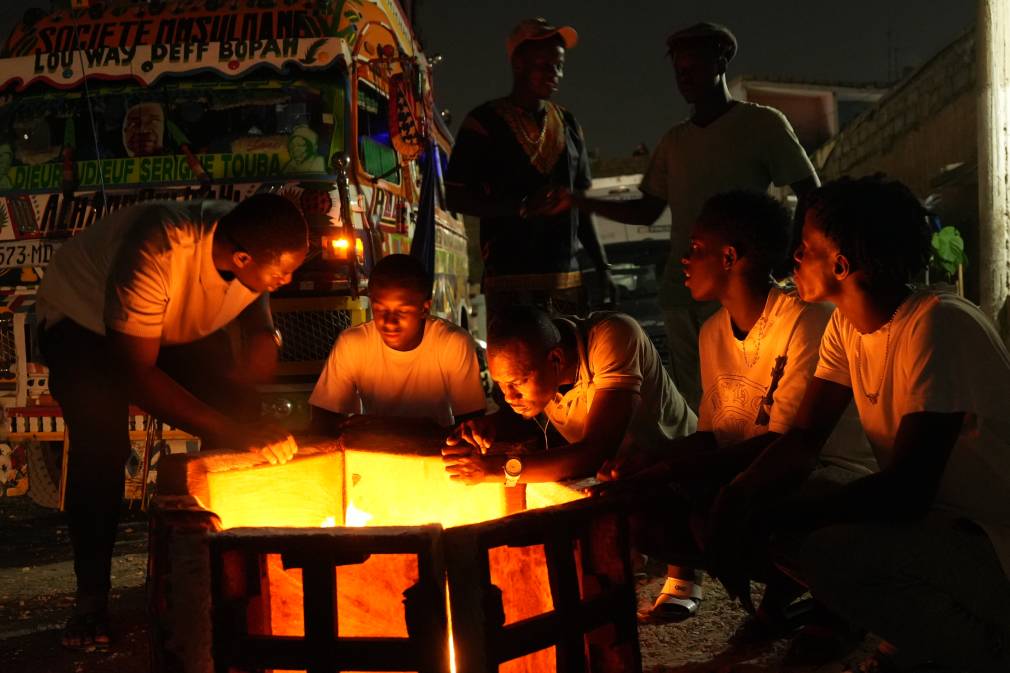
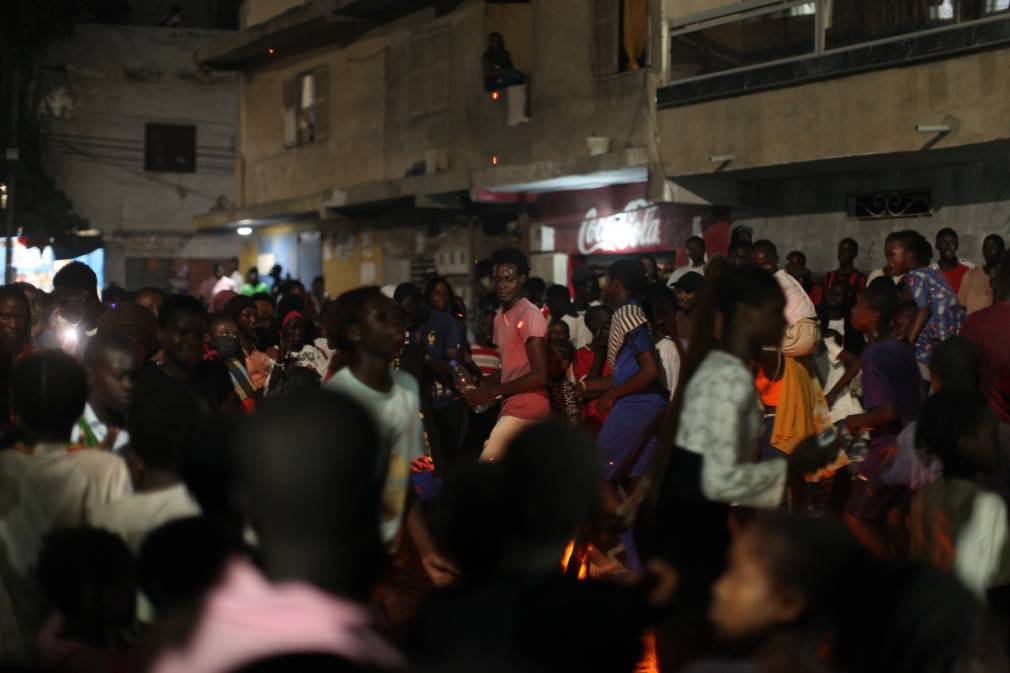
In Dakar, in the industrious commune of Grand Yoff, the sound of Assiko vibrates every day, late into the night. Between the sandy alleys and the adjoining multi-story houses, the percussion resonates with a powerful vital energy. In this working-class neighborhood, nestled in the heart of the Senegalese capital, the rhythm of Assiko pulses relentlessly, accompanying the daily lives of its inhabitants.
Dive into the heart of Grand Yoff before the group’s arrival in Utrecht at the Le Guess Who? festival from November 6 to 9.
A legacy of Cameroon’s Bassa people who passed through Gorée before settling in Dakar, Assiko is proudly carried on by the Assiko Golden Band of Grand Yoff, embodying intergenerational transmission and remarkable openness to the world: “Assiko is music from the heart,” says Abdel Aziz Gning, the group’s lead singer. “It’s a combination of instruments that are very pleasant to listen to, but also music that brings people together. We sing for children, for non-violence, for the community, for unity.” For Abdel Aziz, singing Assiko means singing about life, the joys and wounds of the neighborhood. As well as an ideal of peace. Through its lyrics, the group seeks to “show a good path for our little brothers,” he says.
The origins of Assiko, the Bassa
The history of Assiko is winding: it dates back to the shores of Cameroon, in the Bassa region. There, the rhythm accompanied hip dances, a dynamic and expressive movement centered on the hips and lower back. Performed during ceremonies, popular gatherings, and community celebrations, this dance conveyed vitality and unity, while connecting the dancer to the rhythm of the drums with highly aesthetic choreography. Over time, this dance crossed borders: during colonization, Senegalese workers who had left for construction sites in Cameroon discovered this rhythm and brought it back to Gorée, and finally to Dakar: “They came back with the Assiko in their luggage,” says Djiby Ly, the group’s flutist. “From Gorée, the rhythm spread throughout the city, then to working-class neighborhoods such as Grand Yoff. Today, here, it has become a very strong marker of identity.”
In Grand Yoff, Assiko has found fertile ground thanks to the vitality of community life, particularly through the lively local Sports and Cultural Association (ASC). “Assiko has established itself here thanks to ASC Grand Yoff,” confirms Luda, the group’s president. “Each ASC combines sport and culture within a neighborhood in Dakar. We chose Assiko to liven up stadiums, bonfires, weddings, and baptisms. From there, it became a real tradition, deeply rooted and widely supported by the residents here.” Assiko owes its success and tradition in part to the power of its rhythms and the richness of its instruments. The numerous percussion instruments create a hypnotic rhythmic dialogue, while the songs exalt joy, solidarity, and belonging to the neighborhood. It is music that brings people together and calls for everyone to participate. Assiko transforms every performance into a vast collective celebration. Extremely popular, the genre brings together everything that is most vibrant about Dakar: noise, fervor, and brotherhood.
A legacy spanning generations
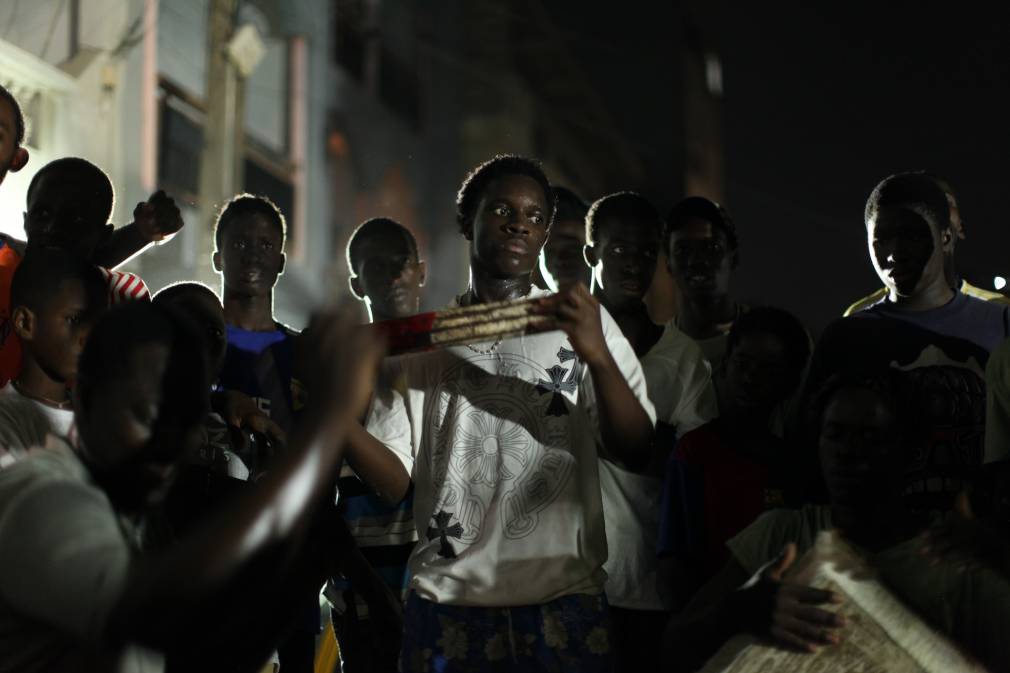
“I’m part of the second generation,” says Luda. “They represent the third. And there are already kids learning right now, just behind us.” This passing of the torch happens naturally, in the streets, in schoolyards, or in the shade of soccer fields. “We were spotted when we were very young,” recalls Abdel Aziz. “We were playing table soccer and PlayStation in the streets. Joachim, a great drummer from the neighborhood, saw us and brought us into his group. That’s where we learned everything.” For these young people, Assiko is not just a music school, it’s a school of life. The group embodies the values of family, discipline, and respect.
“In Grand Yoff, there are many temptations,” admits Luda. “Drugs, delinquency… When we introduce children to Assiko, we keep them in a structured environment. We tell them that school and religion come first, then music.” In this way, the group plays a major social role: it channels energy, brings people together, and educates. Through it, the neighborhood’s youth find a voice, a rhythm, a meaning. Percussion is the beating heart of Assiko. “Assiko is a mix of all African instruments,” explains the flutist. “There are basses, double basses, the tchoum from Guinea, the bougarabou from Casamance, the djembe, and the sabar. The tchatcha keeps the beat.”
“Modernity doesn’t destroy the source, it amplifies it.”
Each instrument plays a specific role, a distinct voice in the group’s polyrhythm. This diversity of sound, the result of cultural fusion, illustrates Assiko’s ability to absorb other influences while retaining its soul: “Today, we’re trying to beef up the sound with brass and flutes,” continues flutist Djiby Ly. “We are currently working on creating a form of jazz, an Afro-jazz based on Assiko. You know, modernity doesn’t destroy the source, it amplifies it.” This is how the album Maggeteki came about, signed to the excellent New York label Mississippi Records (Yo La Tengo, Dead Moon, Jean-Bosco Mwenda) as well as the Swedish label Jarlsdom. “Maggeteki means to grow and succeed,” explains the flutist. “And that’s the whole message of the group: to take root in tradition in order to rise above it.”
In Grand Yoff, Assiko is everywhere. It sets the pace for weddings, baptisms, religious festivals, soccer games, but also political campaigns and popular struggles. “We play for everyone: the church, the markets, the neighborhoods, the politicians,” explains Abdel Aziz. “But if it’s in Grand Yoff, we do it for free. That’s our priority. ” Assiko has become a lever for cohesion, a symbol of shared identity. When Senegal won the Africa Cup of Nations, the group accompanied the celebrations late into the night. When the faithful of Grand Yoff walked to the pilgrimage site of Poponguine, Assiko accompanied them from Dakar to the basilica: “That day, we played from 8 a.m. to 6 p.m. People were crying with joy. It’s something you never forget,” recalls Luda with emotion.
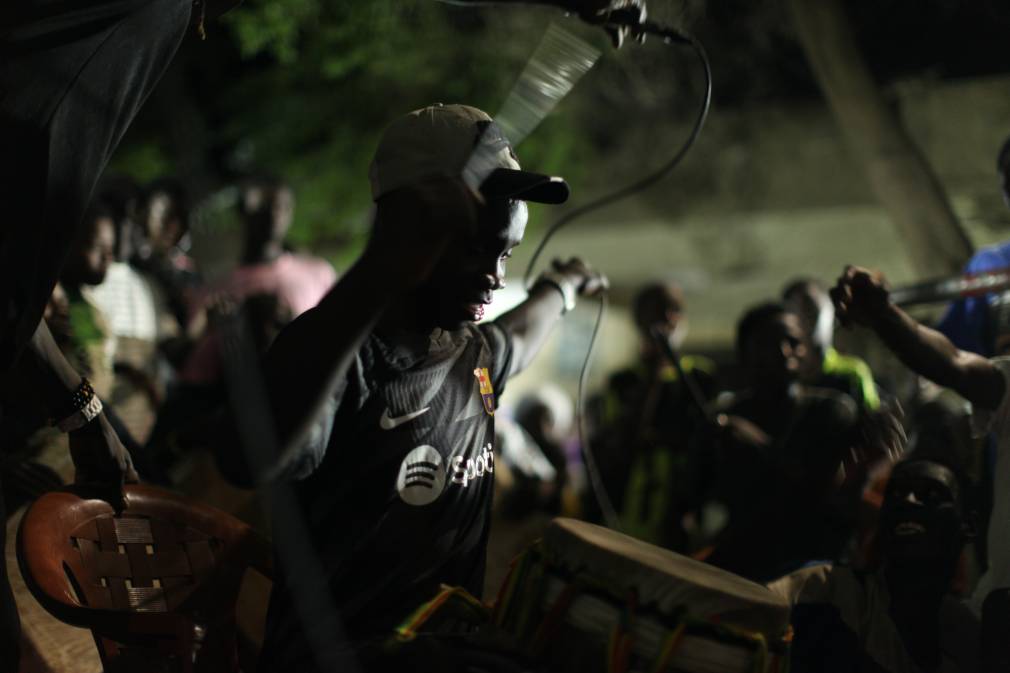
Bringing generations together, transcending borders
Despite its musical success and social influence, the group faces significant material difficulties: Assiko’s musicians lack rehearsal space, funding remains scarce, and institutional recognition is partial. “We often have to rent a studio for 10,000 francs a day,” Luda laments. “At the Senegalese Society for Copyright and Related Rights, only singers are registered,” he explains. “Drummers, for example, are not recognized. Yet without them, there would be no Assiko.”
These obstacles and setbacks have not prevented the group’s reputation from growing. Already invited to perform at major sporting events in Ivory Coast, Assiko Golden Band dreams of becoming a showcase for Senegalese musical heritage around the world: “We are no longer just a Senegalese group,” says Abdel Aziz. “We are starting to go international. From Gorée to Grand Yoff, from Cameroon to Dakar, Assiko has undergone a thousand transformations without ever losing its essence. It has been passed down from generation to generation, incorporating other rhythms such as Mbalax, Bambara, and Soninke, without losing its identity.
“Before, pure Assiko consisted of four instruments: the bass, the double bass, the tchatcha, and the rolling,” explains Luda. “Today, we’ve added other sounds, but the rhythm remains the same. As you know, Assiko is all about rhythm.” This percussive ensemble has become a true heritage, a collective movement that reflects the memory of a people, their inventiveness, and their ability to transform constraints into art. Assiko connects the ages, brings generations together, and transcends borders: “Our music is a rhythm of resistance and life,” Abdel Aziz tells us. “Whether you are sad or angry, listen to Assiko and your troubles will disappear.” In Grand Yoff, young people continue to learn, rehearse, and dream. The elders watch over them, the instruments respond to each other, and voices rise up.
The Grand Yoff collective is expected in Utrecht from November 6 to 9, 2025, on stage at the Le Guess Who? Festival, for a one of a kind concert.